Restaurant Operations Audit: What to Check
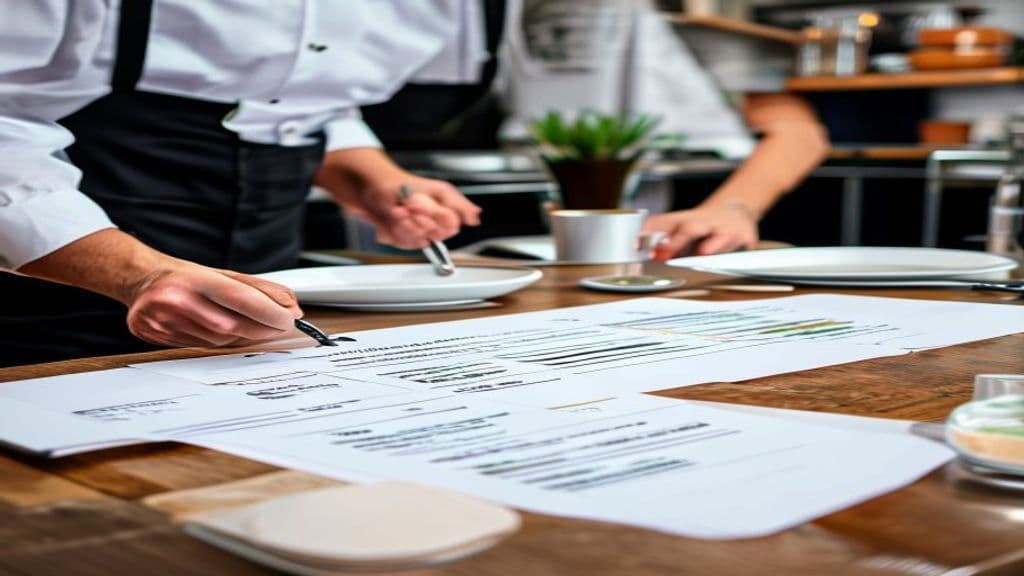
Most restaurant owners sense that "something is off" — revenue grows but profit doesn't. The team seems solid but guests complain. Food cost looks "about right" but money keeps leaking.
An operations audit isn't a tax inspection. It's a business diagnostic: a systematic analysis of every process over 5–7 days that reveals exactly where money and quality are being lost.
Over three years we've conducted 35+ audits across 8 countries. Average finding: 8–15% of revenue lost to identifiable, fixable inefficiencies. Here's how it works.
Why You Need an Audit
Three typical situations where an audit pays for itself within the first month:
Situation 1: "Profit doesn't grow with revenue." A Dubai restaurant, $180,000/month revenue, $8,000 profit. The audit revealed: food cost at 38% (benchmark: 21%), labor cost at 35% (benchmark: 28%), write-offs untracked. After implementing recommendations — profit reached $28,000/month within 3 months.
Situation 2: "Turnover is killing quality." A 4-unit chain in Almaty, 80% annual turnover. The audit found: no onboarding system, no career paths, salaries 12% below market. After corrections — turnover dropped to 35% within 6 months.
Situation 3: "Preparing to scale." A single restaurant in Tashkent planning a second location. The audit revealed: 60% of processes depended on one person (the owner). Without documentation and delegation, the second venue was doomed.
7 Audit Zones
Zone 1: Finance and P&L
What we check:
- P&L structure: are all costs captured and correctly categorized
- Food cost: theoretical vs. actual, the gap and its causes
- Labor cost: percentage of revenue, productivity per employee
- Prime cost (food + labor): healthy range is 55–65%
- Average check: trends, comparison by day and shift
- RevPASH (Revenue Per Available Seat Hour): the key floor efficiency metric
Typical finding: 90% of restaurants don't calculate theoretical food cost. They know actual (purchases / revenue), but not what it should be. The gap ranges from 2 to 8 percentage points.
A restaurant in Bishkek: actual food cost 34%, theoretical 27%. The 7% gap = $6,300/month in losses. Causes: over-portioning (3%), untracked staff meals (2%), spoilage from improper storage (1.5%), receiving errors (0.5%).
Zone 2: Kitchen and Production
What we check:
- Existence and accuracy of recipe cards
- Prep process: planning, weighing, tracking
- Storage: temperature compliance, FIFO, labeling
- Sanitation: checklists, cleaning frequency, personal hygiene
- Ticket times: order-to-table by category
- 86'd items: frequency, causes, lost revenue
Method: we measure the same dish prepared by different cooks. Weight and cost variance indicates standardization quality. If variance exceeds 10%, recipe cards aren't working.
Typical finding: in 80% of venues, recipe cards exist but haven't been updated in 6+ months. Supplier prices have changed, dish compositions have drifted, actual cost is unknown.
Zone 3: Service and Front of House
What we check:
- Service standards: greeting, approach time, upselling
- Menu knowledge: staff testing (allergens, preparation methods, recommendations)
- Cleanliness: dining area, restrooms, entrance
- Queue and reservation management
- Complaint handling: response time, compensation protocol
- Average check by server: variance reveals training quality
Method: mystery guest visits + observation during peak and off-peak hours. Minimum two visits — to see the difference between a "good" and a "normal" day.
A restaurant in Astana: the average check gap between the best and worst server was 40%. The best actively recommends, knows compositions, suggests dessert. The worst silently takes orders. With 200 guests per day, that's $1,200/month in missed revenue.
Zone 4: Purchasing and Suppliers
What we check:
- Number of suppliers per category (monopoly vs. competition)
- Receiving process: weighing, quality checks, documentation
- Price monitoring: market comparison, review frequency
- Payment terms: prepayment, credit, volume discounts
- Write-offs: volume, causes, documentation
Typical finding: 60% of restaurants don't renegotiate supplier prices more than once a year. During that time, prices on key items may rise 10–20%, while the restaurant continues selling at old menu prices.
Zone 5: People and HR
What we check:
- Staffing plan vs. actual workload: overstaffed or understaffed
- Compensation structure: base pay, bonuses, KPIs
- Training: onboarding program, ongoing education, assessments
- Scheduling: shift efficiency, overtime, hourly labor cost
- Culture: team atmosphere, kitchen-floor relations
Key metric: Revenue Per Labor Hour (RPLH). Healthy range for casual dining: $35–55. Below $30 signals overstaffing or low traffic.
Zone 6: Marketing and Guest Experience
What we check:
- Online presence: Google Maps, aggregators, social media
- Reviews: average rating, response rate, top complaints
- CRM: guest database, visit frequency, loyalty program
- Photography and visuals: do they match reality
- Competitive analysis: 5 nearest competitors, their average check, positioning
Typical finding: 70% of restaurants don't respond to Google Maps reviews. A rating below 4.3 reduces search-driven traffic by 25–35%.
Zone 7: Technology and Automation
What we check:
- POS system: used to full capacity (analytics, inventory, CRM modules)
- Purchasing automation: par levels, auto-ordering
- Inventory management: actual vs. nominal, count frequency
- Reservations: online system or paper notebook
- Cameras: coverage of key zones (register, storage, kitchen)
Typical finding: 85% of restaurants use their POS only as a cash register. Analytics, inventory, and CRM modules are paid for but unconfigured. It's like buying a Tesla and only driving in first gear.
Deliverables
After the audit, clients receive:
- Report (30–50 pages): diagnostics for each zone, metrics, benchmarks, specific findings with photos and data
- Priority matrix: all recommendations ranked by impact (profit effect) and effort (implementation difficulty). Quick wins with high impact come first
- 90-day roadmap: weekly implementation plan with owners and KPIs
- Financial model: projected P&L after implementing recommendations
Results in Numbers
Data from 35 audits over 3 years:
| Metric | Before audit | After 90 days | |---|---|---| | Food cost (avg) | 34.2% | 29.8% | | Labor cost (avg) | 32.1% | 27.5% | | Average check | baseline | +8–12% | | Staff turnover | 55%/year | 30–40%/year | | Google rating | 4.1 | 4.4 |
Average audit ROI: 14x in the first year. The audit cost pays for itself within 3–6 weeks of implementation.
When You DON'T Need an Audit
Honestly — it's not for everyone:
- If the restaurant is less than 6 months old — too early, processes are still forming
- If the owner isn't ready to change processes — the audit becomes a nice PDF in a desk drawer
- If there's no one to implement (GM or ops director) — recommendations won't materialize
An audit makes sense when there's a will to change and a resource to execute.
How to Start
An audit isn't an "inspection." It's an investment in understanding your own business. Every restaurant we've audited found at least 5% of revenue that could be recovered — without increasing traffic or raising prices.
Raiqo conducts operations audits for restaurants and chains across the CIS, UAE, and Southeast Asia. Format: a 5–7 day on-site team visit + 90 days of implementation support. If you want to find out where your restaurant is leaking — let's start with a conversation.
Related Reading
Need help with your restaurant?
We take on a limited number of projects each quarter.
Start a Conversation