AI in Restaurant Operations: What Works in 2026
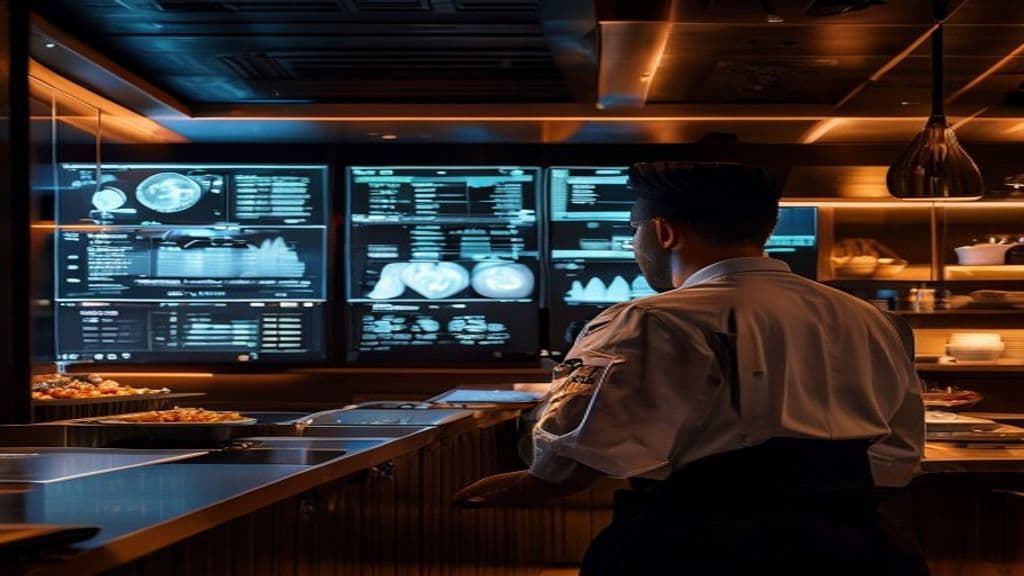
Every tech vendor in hospitality is selling "AI-powered" something. Most of it is a search bar with better marketing.
We've tested dozens of AI tools across real restaurant operations — from single venues in Almaty to 20-location chains in the Gulf. Here's what actually moves the needle, what's promising but early, and what's pure noise.
What Works Today
1. Demand Forecasting
ROI: High. Implementation: Medium.
AI-powered demand forecasting is the single most impactful technology for restaurant operations right now. Not because the AI is brilliant — but because humans are terrible at predicting covers.
Modern forecasting tools analyze:
- Historical sales data (day of week, time of day, seasonality)
- Weather (a rainy Tuesday vs. sunny Tuesday can mean 30% difference)
- Local events (concerts, sports, holidays, even nearby construction)
- Trending patterns from reservation systems
Real impact: A 12-location chain we worked with reduced food waste by 22% and cut overtime labor costs by 15% after implementing demand-based prep and scheduling. That was $180K/year recovered.
Tools that work: Most major POS platforms now integrate forecasting. The key is feeding them clean, consistent data for at least 12 months.
2. Automated Inventory and Ordering
ROI: High. Implementation: Easy-Medium.
This is demand forecasting's natural extension. If you know tomorrow's covers with reasonable accuracy, you can auto-generate purchase orders.
The system calculates: predicted demand × recipe requirements − current stock = order quantity
Simple math. But doing it manually across 200+ SKUs, adjusted for supplier lead times and minimum order quantities, is where humans make expensive mistakes.
Real impact: Automated ordering typically reduces over-purchasing by 15-25% and virtually eliminates emergency orders (which carry 20-40% price premiums).
3. Review Sentiment Analysis
ROI: Medium. Implementation: Easy.
Manually reading every Google, TripAdvisor, and social media review is impossible at scale. AI sentiment analysis aggregates all reviews and surfaces:
- Trending complaints (before they become crises)
- Staff-specific feedback patterns
- Location comparison on service metrics
- Competitive benchmarking
Real impact: One operator caught a recurring "slow service" complaint at a specific location — traced it to a scheduling gap during Tuesday dinner service. Fix took one week. Without automated monitoring, it would have festered for months.
4. Dynamic Labor Scheduling
ROI: High. Implementation: Medium.
Labor is typically 25-35% of restaurant revenue. Most managers schedule based on last week's pattern, not predicted demand.
AI scheduling tools optimize for:
- Predicted covers per 30-minute interval
- Required skill mix (not just bodies)
- Labor law compliance (break times, overtime thresholds)
- Staff preferences (reduces no-shows and turnover)
Real impact: 3-5% reduction in labor cost as a percentage of revenue. For a $2M/year venue, that's $60-100K annually.
What's Promising But Early
5. Computer Vision for Quality Control
Cameras trained to check plate presentation, portion sizes, and kitchen cleanliness. The technology works in controlled demos. In real kitchens — with steam, movement, variable lighting — accuracy drops to 70-80%.
Our take: Wait 12-18 months. The hardware (better cameras, edge computing) is catching up. Early adopters are spending more on calibration than they're saving.
6. AI-Powered Phone Systems
Automated phone ordering and reservation handling. Works well for simple interactions ("I'd like to book a table for 4 at 7pm"). Struggles with complex requests, dietary questions, and anything requiring judgment.
Our take: Good for high-volume, standardized operations (fast casual, delivery-focused). Not ready for fine dining or complex service models.
7. Personalized Marketing
AI that segments your customer database and sends targeted offers based on visit history, spending patterns, and predicted churn.
Our take: The algorithms work. The problem is data quality. Most restaurants don't have clean, unified customer data. Fix your CRM first, then layer on AI.
What's Still Noise
Fully Autonomous Kitchen Robots
Great for social media. Impractical for real service. The economics don't work for any format except ultra-high-volume, limited-menu operations. And they break down at the worst possible times.
AI Menu Creation
Tools that claim to design your menu using AI. Your menu is a strategic expression of your concept, your chef's skills, and your market. An algorithm can inform decisions (menu engineering data is valuable). It can't replace culinary vision.
"AI Consultants" That Replace Human Advisors
ChatGPT can give you generic restaurant advice. It can't walk your kitchen at 7pm on a Saturday, feel the energy, talk to your team, and diagnose what's actually wrong. AI augments consulting. It doesn't replace the person who's operated 20+ venues.
The Implementation Playbook
If you're starting from zero, here's the order:
Month 1-2: Get your data house in order. Clean POS data, consistent categorization, accurate inventory counts. AI is only as good as its inputs.
Month 3-4: Implement demand forecasting. Start with one location. Measure accuracy weekly. Tune the model.
Month 5-6: Layer on automated ordering. Connect forecasting to purchasing. Set human approval thresholds (auto-approve orders under $500, flag larger ones).
Month 7-8: Deploy smart scheduling. Let the algorithm suggest, managers approve. Build trust gradually.
Month 9-12: Add sentiment monitoring and start exploring advanced use cases relevant to your specific operation.
The Bottom Line
AI in restaurants isn't about replacing people. It's about giving operators better data, faster, so they can make better decisions.
The restaurants that win aren't the ones with the most AI tools. They're the ones that use AI to amplify what good operators already know — and free them from the mechanical work that machines do better.
Start with the basics. Measure everything. Scale what works.
Related Reading
Need help with your restaurant?
We take on a limited number of projects each quarter.
Start a Conversation