Restaurant SOPs: How to Standardize Operations
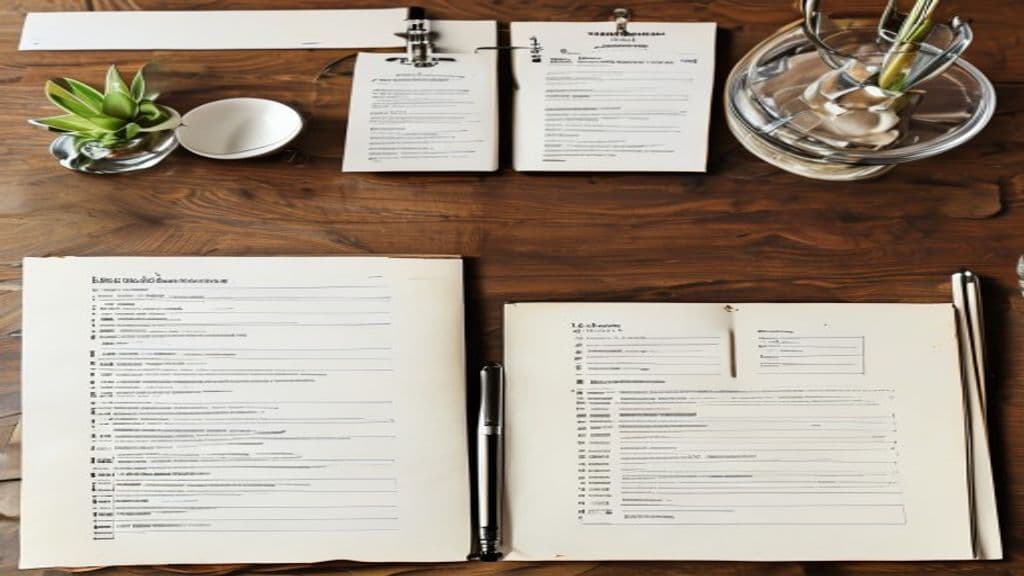
Every restaurant operates as a system. Dozens of tasks repeat daily across kitchen, floor, and management. When those tasks depend on individual memory and habit rather than documented procedures, the result is predictable: inconsistent quality, slow onboarding, preventable losses, and an owner chained to the operation.
Standard Operating Procedures fix this. Not by adding bureaucracy, but by turning tribal knowledge into a reliable, trainable, measurable system. Restaurants that implement SOPs consistently outperform those that do not — and the gap widens as the business scales.
What Is an SOP and Why Restaurants Fail Without Them
An SOP is a step-by-step document that describes exactly how a specific task should be performed. Not a mission statement. Not a general guideline. A concrete sequence of actions with defined standards, tools, and expected outcomes.
Most restaurants skip SOPs because the concept feels corporate. The kitchen already "knows" how to cook. The servers already "know" how to greet guests. The manager already "knows" how to close the shift. Until the chef calls in sick, a new server joins mid-season, or the second location opens — and suddenly nobody "knows" anything the same way.
The financial cost of operating without SOPs is measurable:
Portion inconsistency. When five cooks prepare the same dish differently, food cost variance between them reaches 15–22%. On a restaurant doing $120,000/month with a 21% food cost target, that translates to $1,800–2,600 in monthly waste from portioning alone.
Extended onboarding. Without written procedures, training a new hire depends entirely on whoever happens to be working that day. Average time to competence without SOPs: 3–4 weeks. With structured SOPs and a training plan: 5–7 days. For a 25-person team with 50% annual turnover, that is 150 person-days per year consumed by unstructured training versus 44 with SOPs.
Receiving and storage errors. Deliveries not weighed, temperatures not checked, FIFO not followed. These invisible losses accumulate to $1,000–2,500 per month in avoidable write-offs and supplier overcharges.
Scaling paralysis. If every critical process lives in the heads of one or two key people, the business cannot replicate. Opening a second location without SOPs means rebuilding every system from scratch — and hoping the new team somehow guesses the standards.
Across our consulting projects, the total revenue gap between restaurants with documented SOPs and comparable venues without them consistently falls between 12% and 18%.
The 7 Critical SOPs Every Restaurant Needs
You do not need a 300-page operations manual to start. You need the right seven to ten procedures, chosen based on a simple formula: frequency of the task multiplied by the cost of getting it wrong. Start where both are high.
1. Opening and Closing Procedures
These are the simplest SOPs to write and the fastest to show results. Every shift begins and ends the same way, regardless of who is managing.
Opening checklist covers: equipment power-on and function test, walk-in and reach-in temperature verification, dining room setup (tables, lighting, music, signage), POS system check, staff briefing (reservations, specials, 86'd items, VIP notes), restroom inspection, and front door unlock at the scheduled time.
Closing checklist covers: cash-out and register reconciliation, kitchen deep-clean by zone, food storage audit (labeling, FIFO, temperatures), equipment shutdown sequence, security check (doors, windows, gas, water), and end-of-shift report submission.
The key is granularity. Not "clean the kitchen" but "degrease the flat-top grill, wipe down all stainless surfaces with sanitizer solution, sweep and mop the line, empty all trash bins, and confirm walk-in temperature is below 4C." Each item gets a checkbox and a responsible person.
2. Food Preparation and Recipe Standards
Recipe cards are the single highest-ROI document in a restaurant. Each card should include:
- Every ingredient by exact weight in grams (never "a pinch" or "to taste" for production recipes)
- Current cost per portion, updated monthly with supplier prices
- Step-by-step preparation method with timing for each stage
- Plating photo from two angles showing the presentation standard
- Approved ingredient substitutions for out-of-stock situations
- Allergen flags for the dish
Beyond individual recipes, a prep SOP defines the daily preparation workflow: what to prep (linked to sales forecast by day of week), how much to prep (par levels based on rolling 4-week averages), how to label and store prepped items, and how to track yield (input weight vs. output weight).
A six-unit coffee chain we worked with in Central Asia reduced cost variance on their core beverages from 18% to under 3% within 60 days of implementing photo-standard recipe cards. Monthly savings: $2,100 across the chain.
3. Cleaning and Sanitation
Sanitation SOPs protect both guests and the business. A single food safety incident can cost tens of thousands in liability, lost revenue, and reputation damage.
Structure cleaning SOPs in three tiers:
Continuous (during service): wipe work surfaces every 30 minutes, sanitize cutting boards between protein types, maintain handwashing frequency, keep the floor clear of debris and spills.
End of shift: full station breakdown and sanitization, equipment cleaning per manufacturer specs, trash removal, floor scrub with approved solution at correct dilution ratio.
Weekly deep clean: hood and vent degreasing, walk-in and reach-in interior scrub, drain cleaning, equipment calibration checks, pest inspection of storage areas.
Each task needs a defined frequency, a named cleaning agent or method, a responsible role, and a verification signature. Post laminated task cards at each station showing only what applies to that specific zone.
4. Service Standards
A service SOP is not about scripting every word a server says. It is about establishing a minimum quality floor so that every guest receives a consistent experience, regardless of who is working the shift.
Define the guest journey as a series of timed touchpoints:
- Greeting within 30 seconds of seating
- Water and menu presented, aperitif or daily special offered
- Order taken with allergy check and a specific recommendation (not "anything else?" but a named high-margin dish)
- Food quality check 2 minutes after main course delivery
- Dessert and coffee offered proactively after clearing mains
- Check presented within 2 minutes of request
- Farewell with a personal note — mentioning an upcoming event, a seasonal menu, or simply thanking regulars by name
Each step has a timing window and a suggested script. Not to create robots, but to set a floor that good servers can improvise above.
Pair the service standard with a complaint-handling protocol. The LAST method is effective and easy to train: Listen without interrupting, Apologize sincerely, Solve with a specific action (replace the dish, offer a complimentary item, apply a discount), Thank the guest for the feedback. Define what each team member can authorize without manager approval — for example, a complimentary dessert for any wait exceeding 15 minutes.
Restaurants with a structured upselling protocol built into their service standard see average check increases of 12–18% without any increase in guest traffic.
5. Cash Handling and Financial Controls
Cash is where trust meets temptation. Every restaurant needs a clear procedure for:
- Register opening: counted float, verified by two people, logged with signatures
- Payment processing: handling cash, cards, split checks, voids, and discounts — who can authorize each type
- Register closing: counted drawer compared to POS report, variance documented and explained
- Cash drop procedure: when, how, by whom, with what documentation
- Tip handling: distribution method, timing, record-keeping
Define the escalation path for variances. A $5 discrepancy requires a note in the shift log. A $50 discrepancy requires same-day manager review. A pattern of small variances triggers a formal investigation. Remove ambiguity so that honest employees are protected and dishonest behavior becomes visible quickly.
6. Emergency Procedures
Emergencies are rare. That is exactly why they require written procedures — nobody performs well under pressure when improvising for the first time.
Cover at minimum:
- Fire: evacuation routes, assembly point, extinguisher locations, who calls emergency services, who accounts for all guests and staff
- Medical emergency: first aid kit location, emergency numbers, nearest hospital address, incident report form
- Power outage: backup lighting activation, food safety protocol (time limits before walk-in contents are at risk), guest communication script
- Equipment failure: critical equipment list with emergency repair contacts, temporary workaround procedures
- Security incident: robbery protocol (comply, observe, report after), aggressive guest de-escalation steps
Post evacuation maps in the kitchen and staff areas. Review emergency procedures during every new hire onboarding and conduct a refresher with the full team at least twice per year.
7. Inventory Management
Inventory SOPs control the gap between theoretical and actual food cost — the gap where most restaurant profit quietly disappears.
Define: counting frequency (full count weekly, high-value items daily), counting method (same person, same route, same units every time for consistency), recording system (digital spreadsheet or inventory software — never loose paper), variance thresholds that trigger investigation (anything above 2% on a category), and par level calculation (average daily usage multiplied by lead time plus safety stock).
Link inventory to purchasing: who places orders, based on what data, from which approved suppliers, with what approval process for new vendors or price increases above a defined threshold.
A well-executed inventory SOP typically reduces food cost by 3–5 percentage points within the first quarter of implementation.
How to Write an Effective SOP: Template and Principles
Most SOPs fail not because the content is wrong but because the format is unusable. Follow five principles:
One procedure, one page. If an SOP exceeds a single A4 page, split it into separate documents. A cook in the middle of service will not flip through a manual. They need the relevant page, right now.
Lead with visuals. A photo of the correct plate, a diagram of the storage layout, a color-coded cleaning schedule — these communicate faster and more reliably than paragraphs of text. For recipe cards, include a photo of the finished dish from the guest's perspective and a photo of the mise en place setup before cooking begins.
Specify, do not suggest. Replace "keep the station clean" with "wipe the station surface with blue sanitizer cloth every 30 minutes and after each protein changeover." Replace "greet guests promptly" with "approach the table within 30 seconds of seating, make eye contact, and say: Welcome to [name], my name is [name], can I start you with still or sparkling water?"
Write with the people who do the work. SOPs drafted in an office by someone who has never worked a Friday night rush will miss real constraints and bottlenecks. Co-author with your chef, sous chef, and lead server. They will identify the steps you would skip and feel ownership over the result.
Use a consistent template. Every SOP should follow the same structure:
- Title — name of the procedure
- Purpose — one sentence on why this matters
- Scope — which roles this applies to
- Materials needed — tools, chemicals, equipment
- Step-by-step procedure — numbered actions
- Quality standard — what "done correctly" looks like (photo if applicable)
- Review date — when this SOP was last updated and when the next review is due
Common Mistakes That Kill SOPs
Too long. A 40-page operations manual gets read once during onboarding and never touched again. Effective SOPs are modular — each one fits on a single page and covers exactly one task.
Too vague. "Ensure food quality" is not an SOP. It is a wish. Every instruction must be specific enough that two different employees reading it independently would perform the task the same way.
Never updated. SOPs written 18 months ago with old supplier names, discontinued menu items, and outdated pricing are worse than no SOPs at all — they signal that management does not take its own standards seriously. Set a quarterly review cycle. Assign an owner for each SOP category. Update immediately when a menu item, supplier, or piece of equipment changes.
No team buy-in. If SOPs are imposed from above without explanation or input, staff will comply only when watched. Involve the team in writing them, explain the reasoning behind each standard, and recognize people who follow them consistently.
Digital vs. Paper SOPs
Paper works for small, single-location restaurants. Laminated cards at stations, printed checklists on clipboards, a binder in the manager's office. The advantages are simplicity and zero technology dependency.
The disadvantages surface at scale: paper cannot be updated simultaneously across locations, completion data cannot be tracked automatically, and physical documents get lost, stained, or ignored.
Digital systems — Google Docs and Notion for basic needs, or specialized platforms like Jolt, Trail, and Operandio for advanced requirements — offer version control, instant distribution to all locations, completion tracking with timestamps, photo verification of task completion, and analytics dashboards on compliance rates.
The transition point is typically around 2–3 locations or 40+ employees. Below that, paper with discipline is sufficient. Above it, the overhead of managing physical documents exceeds the overhead of adopting a digital tool.
Regardless of format, the core rule holds: the SOP must be accessible at the point of work. A recipe card stored on a shared drive that requires three clicks and a password will not be used during a busy service. Print it. Laminate it. Mount it at eye level on the relevant station.
How to Train Staff on SOPs
Writing SOPs without a training system is like publishing a textbook nobody assigns as reading. Three phases matter:
Onboarding (Days 1–30)
Every new hire receives a structured first two weeks:
- Day 1: facility tour, team introductions, uniform and tools, full menu overview, review of the 3–5 SOPs most relevant to their role
- Days 2–3: shadow an experienced team member, observe each SOP in practice, ask questions
- Days 4–5: perform tasks independently under direct supervision, receive immediate corrective feedback
- Day 7: written and practical quiz covering menu knowledge, key procedures, and safety basics
- Day 14: full assessment against all role-specific SOPs
- Day 30: manager evaluation and probation decision
Ongoing Testing
Knowledge decays without reinforcement. Schedule monthly 5-minute quizzes — digital if possible (a Telegram bot works well), paper if not. Five questions on menu items, procedures, or safety protocols. Track scores over time. If 60% of the team misses the same question, the problem is the SOP, not the team.
Quarterly Refreshers
Every quarter, run a focused 30-minute training session on one SOP category. Rotate through the year: Q1 kitchen standards, Q2 service protocol, Q3 safety and sanitation, Q4 cash handling and inventory. Include any updates from the quarterly SOP review. Make sessions interactive: role-play a complaint scenario, blind-taste a portion for correct size, race to set up a station per the opening checklist.
Metrics to Track SOP Compliance
SOPs without measurement are suggestions. Define KPIs that directly reflect whether procedures are being followed:
| Metric | What It Measures | Target | Frequency | |---|---|---|---| | Food cost variance | Recipe card compliance | Under 2% gap (theoretical vs. actual) | Weekly | | Portion weight deviation | Prep SOP adherence | Under 5% standard deviation | Daily (5 random checks) | | Ticket time | Kitchen workflow efficiency | Within category benchmarks | Weekly average | | Checklist completion rate | Opening/closing discipline | 100% | Every shift | | Average check by server | Upselling protocol adherence | Under 15% gap between top and bottom | Weekly | | Guest complaints | Overall service quality | Declining trend by category | Weekly | | New hire time to competence | Onboarding SOP effectiveness | Under 10 days | Per hire | | Internal audit score | Cross-SOP compliance | Above 90% pass rate | Weekly (10 random items) |
Post these metrics where the team can see them. Not as punishment, but as feedback. When the kitchen sees portion variance drop from 18% to 4%, they understand the recipe cards matter. When servers see the top earner also has the highest average check, the upselling protocol stops feeling like a mandate and starts looking like a path to higher income.
The ROI of Standardization
Data from 15 SOP implementation projects:
| Metric | Before | After 90 days | |---|---|---| | Dish cost variance | 15–22% | 3–5% | | New hire time to competence | 3–4 weeks | 5–7 days | | Food cost | 33% avg | 29% avg | | Average check | baseline | +14% | | Guest complaints | 12/week | 4/week | | Average ticket time | 22 min | 15 min |
For a restaurant doing $80,000/month: a 4-point food cost reduction saves $3,200/month, a 14% average check increase generates $11,200/month in additional revenue. Combined annual impact: over $170,000.
The cost of developing and implementing a complete SOP package: $5,000–15,000 with a consultant, or 2–3 months of a GM's dedicated time if built in-house. First-year ROI: 10x or higher.
Getting Started
You do not need to build everything at once. Start with three SOPs: opening/closing checklists, recipe cards for your top 10 selling dishes, and a one-page service standard. Implement those three, train on them, measure them for 30 days. Then add the next category.
SOPs are not about control. They are about building a business that delivers consistent quality whether the owner is on the floor or on a different continent. They are the difference between being your restaurant's best employee and being its owner.
Raiqo builds operational systems for restaurants and multi-unit chains — from recipe card development to complete SOP packages with staff training and 90-day implementation support. If standardizing your operations is on the agenda, let's talk about your project.
Related Reading
Need help with your restaurant?
We take on a limited number of projects each quarter.
Start a Conversation