How to Open a Restaurant in Vietnam: Guide for Foreigners
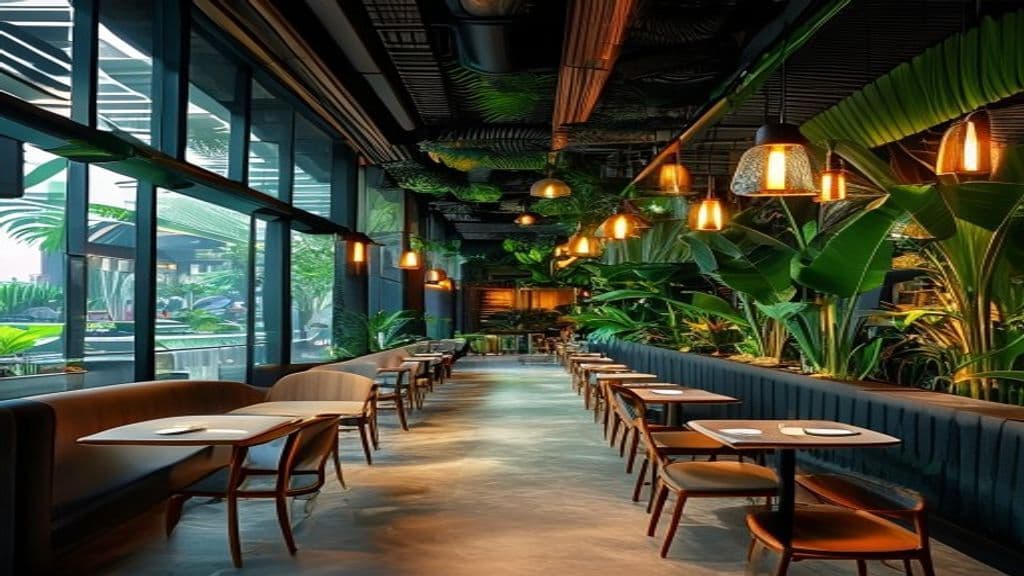
Vietnam is a market of 100 million people with a median age of 31 and F&B spending growing at +14% annually. GDP grew at 6.5% in 2025, making it one of the fastest-expanding economies in Southeast Asia. Over 18 million international tourists visited the country last year — a figure projected to hit 22 million by 2027. Ho Chi Minh City and Hanoi rank among Asia's top 10 cities for new venue density. It sounds attractive — and that's exactly why there are so many expensive failures here.
According to local industry associations, roughly 60% of foreign-invested restaurants don't survive past 18 months. The reasons aren't food quality or marketing. Problems start with legal structure, location choice, and a fundamental misunderstanding of operational realities.
We've helped launch 7 venues in Vietnam over the past three years. Here's what actually matters.
Why Vietnam is Hot for F&B Right Now
Three macro factors make Vietnam one of the most compelling restaurant markets in Asia.
Demographics. With a median age of 31, Vietnam has one of the youngest populations in the region. Over 60% of the population is under 35, and this cohort spends more on dining out than any previous generation. The urban middle class is growing at 10% per year, creating a wave of consumers willing to pay for quality dining experiences.
Tourist flow. Vietnam's tourism infrastructure has matured significantly. Direct flights from 30+ countries, e-visa availability for 80+ nationalities, and competitive hotel pricing attract both budget travelers and affluent visitors. Tourist-driven F&B revenue in HCMC alone exceeds $2 billion annually.
Rising disposable income. Average monthly income in HCMC reached $580 in 2025 — modest by Western standards, but F&B spending as a share of household income is among the highest in Asia at 35%. Vietnamese culture is built around food, and eating out isn't a luxury — it's a daily habit.
1. Legal Structure: LLC or Joint Venture?
Foreigners can't simply rent a space and start cooking. Vietnamese law requires a registered legal entity.
Two main options:
100% foreign-owned LLC (Cong ty TNHH) — full control, but a lengthy process. The de facto minimum charter capital for F&B is around $50,000 (there's no formal threshold, but lower amounts rarely get approved). Registration takes 4-8 weeks through the Department of Planning and Investment (DPI).
Joint venture with a Vietnamese partner — faster, easier with licenses, but you share control. Critical: ensure your charter includes veto rights on operational decisions and a clear exit mechanism. 70% of JV conflicts in Vietnam stem from ambiguous authority.
Common mistake: registering the business under your Vietnamese partner's name "for simplicity." Legally, you're nobody. Your partner can change the locks and the courts will side with them. We've seen this three times.
100% Foreign Ownership: What You Need to Know
Since Vietnam's WTO accession in 2007, foreigners can own 100% of an F&B company — but the process is more complex than for domestic businesses. The key differences:
- You must obtain an Investment Registration Certificate (IRC) before the Enterprise Registration Certificate (ERC). Vietnamese nationals skip the IRC entirely.
- The DPI scrutinizes the business plan, projected revenue, and charter capital. Undercapitalized applications get rejected or endlessly delayed.
- Certain locations (near military zones, government buildings) may have additional restrictions for foreign-owned businesses.
- You'll need a legal representative who holds a valid Vietnam work permit or temporary residence card.
The advantage is real control: you make all operational decisions, retain 100% of profits, and can exit (sell) the business without partner approval. For serious operators planning to stay 3+ years, this is almost always the right structure.
Required Permits and Licenses
- Investment Registration Certificate (IRC) — permission to invest capital
- Enterprise Registration Certificate (ERC) — company registration
- Sub-license for food retail — required for any venue serving food
- Fire safety certificate (PCCC) — inspection by the local fire department
- Food safety certificate (ATTP) — issued by the district health authority after facility inspection
- Liquor license — separate application if selling alcohol, additional 2-4 weeks processing
Total timeline from filing to full approval: 3-5 months. Build this into your business plan — rent starts ticking before you're legally allowed to open.
2. Location Strategy: HCMC vs Hanoi vs Da Nang
The most common mistake foreign restaurateurs make is choosing locations using their home country's logic. Vietnam plays by different rules.
Ho Chi Minh City
The largest F&B market in Vietnam. Over 40,000 food service outlets, with 3,000+ new openings per year.
- District 1 (center) — $40-80/sqm per month, high foot traffic, but the audience is tourists and expats. Local Vietnamese come here for "special occasions." Competition is fierce — over 200 Western-concept restaurants in a 3 km radius
- District 2 (Thao Dien) — $25-45/sqm, growing expat neighborhood, family-oriented. Strong brunch culture. Less price-sensitive clientele
- District 7 (Phu My Hung) — $20-35/sqm, Korean and Japanese communities, stable demand. Particularly strong for Asian fusion and family dining
- Binh Thanh, Go Vap — $12-20/sqm, local audience, high potential with the right concept. Where the smart money is moving
Hanoi
A more conservative market. Guest loyalty is higher, but penetration takes longer.
- Old Quarter — $35-60/sqm, tourist-heavy, narrow spaces, difficult logistics. Charming but operationally challenging
- Tay Ho (West Lake) — $20-35/sqm, expats, diplomats. The closest equivalent to Thao Dien in HCMC
- Cau Giay — $15-25/sqm, young Vietnamese professionals. Rapidly developing tech district
Da Nang
Vietnam's fastest-growing city and an increasingly attractive F&B market. Population of 1.2 million with 9+ million tourists annually.
- My Khe Beach area — $15-30/sqm, tourist-driven, seasonal (peak November-April). Seafood concepts dominate
- An Thuong (Expat Quarter) — $12-25/sqm, growing international community. Year-round traffic, less seasonal than the beach strip
- Han River District — $18-35/sqm, local professionals, emerging nightlife scene
Da Nang's advantage: significantly lower rent and labor costs than HCMC, with tourist density approaching Hanoi levels. The downside: smaller local market and pronounced seasonality.
The rule that works: calculate rent as a percentage of projected revenue. For Vietnam, the healthy range is 8-15%. If rent exceeds 15%, the location is too expensive for your concept.
One of our clients chose a District 1 space at $12,000/month for a 60-seat Italian restaurant. Average check: $25. They needed 2.5 table turns per evening to break even. Reality: 1.3 turns. After 8 months they relocated to District 2 at $5,500/month — and turned profitable within 3 months.
3. Staffing: The Math You Can't Ignore
Average HoReCa salaries in Vietnam (HCMC, 2025-2026):
| Position | Salary ($/month) | |---|---| | Kitchen helper | 250-350 | | Line cook | 400-600 | | Sous chef | 700-1,200 | | Head chef (Vietnamese) | 1,200-2,500 | | Head chef (expat) | 3,000-6,000 | | Server | 200-350 | | Floor manager | 500-900 | | General manager | 1,000-2,000 |
Key considerations:
- Staff turnover in F&B runs at 40-60% annually. This is normal, not an exception. Budget for continuous training
- 13th-month salary (Tet bonus) is legally mandated
- Social contributions add approximately 21.5% on top of salary (BHXH, BHYT, BHTN)
- Work permits for foreign staff cost $400-600 per person + 2-3 weeks processing
Advice: don't bring a full expat kitchen team. One expat chef + a Vietnamese brigade is the optimal model. Saves $8,000-15,000/month compared to three foreign cooks.
4. Budget: Real Numbers
Data from 12 launch projects in Vietnam. Averaged for a 50-80 seat restaurant:
| Line item | Amount ($) | |---|---| | Registration & licenses | 5,000-12,000 | | Design & renovation | 40,000-120,000 | | Kitchen equipment | 25,000-60,000 | | Furniture & decor | 15,000-35,000 | | POS & IT infrastructure | 3,000-8,000 | | Initial inventory | 5,000-10,000 | | Launch marketing | 5,000-15,000 | | Working capital (3 months) | 30,000-60,000 | | Total | 128,000-320,000 |
The range is wide because everything depends on the concept. A 40-seat cafe-bar in Binh Thanh: $130,000. Fine dining in District 1: $300,000+.
Critical point: three months of working capital isn't optional — it's a requirement. We've seen projects that spent 90% of their budget on renovation and opened with only two months of runway. One bad month and it's over.
Rent Deposit: The Hidden Cash Trap
Most Vietnamese landlords require 3-6 months rent as a deposit, payable upfront before renovation begins. For a $6,000/month space, that's $18,000-36,000 locked up before you've installed a single piece of equipment. Factor this into your capital planning — it's the line item most newcomers underestimate.
5. Suppliers and Logistics
Vietnam has excellent local markets but chaotic logistics. Key rules:
Local products — excellent quality and cheap. Seafood, vegetables, rice, herbs — source through trusted intermediaries. Prices are 30-50% lower than "international" suppliers.
Imported products — dairy, cheeses, specific meat cuts (for non-Asian concepts) — through licensed importers. Major players: Annam Gourmet, AFS (Asian Food Solutions), Melikey. Markup: 40-80% over country-of-origin pricing.
Alcohol — requires a separate trading license. Imported alcohol carries duties of 35-65% depending on category. Many restaurants build their concept around cocktails with local craft spirits — higher margins, simpler logistics.
Cold chain — the weak point of Vietnamese logistics. Personally check delivery temperatures for the first 2-3 months. Invest in temperature loggers ($200-500 per set) — they pay for themselves after the first incident.
6. Marketing and Guest Acquisition
Forget TripAdvisor as your main channel. Different tools work in Vietnam:
- Foody.vn / ShopeeFood — the main review and delivery platform. Presence is mandatory
- Facebook — Vietnam's primary social network (70M+ users). Neighborhood Facebook Groups are a powerful channel
- Zalo — the #1 messenger, with Official Account functionality. For loyalty and CRM
- TikTok — explosive growth, especially for visual concepts. Behind-the-scenes cooking videos get millions of views
- KOLs (Key Opinion Leaders) — local food bloggers. Cost: $100-500 per post for micro-influencers, $1,000-5,000 for top-tier
What works at launch: soft opening with 20-30 invited KOLs + Foody listing with promotional pricing for the first 2 weeks. Budget: $2,000-5,000. Generates traffic from day one.
7. Common Mistakes (and How to Avoid Them)
Mistake 1: copying a concept from another country 1:1. A $15 burger bar doesn't work in a country where pho costs $2. Adapt your price positioning: premium casual with a $10-18 average check is the sweet spot for foreign concepts.
Mistake 2: skipping proper legal counsel. Legal support costs $3,000-7,000. Fixing documentation errors costs $10,000-30,000 plus months of downtime.
Mistake 3: ignoring seasonality. Tet (Vietnamese New Year, January-February) is a dead month. Rainy season (May-November in HCMC) reduces foot traffic by 15-25%. Plan your cash flow around these dips.
Mistake 4: not building operational systems from day one. SOPs, checklists, recipe cards, training systems — not "when we grow," but from launch. With 50% turnover, you're retraining half your team every six months. Without documented processes, every new hire is a gamble.
Mistake 5: underestimating bureaucratic timelines. Every permit involves multiple departments, inspections, and revisions. A "2-week" fire safety inspection can take 6 weeks if your building doesn't meet code. Pad every government timeline by 50%.
Mistake 6: choosing a landlord, not a location. In Vietnam, the relationship with your landlord matters as much as the address. Ask about lease renewal terms upfront. We've seen restaurants forced to relocate after 2 years because the landlord tripled the rent, knowing the tenant had invested $100,000+ in renovation.
Realistic Timeline: 7-10 Months
- Choose legal structure and find a licensing lawyer (month 1)
- In parallel — location search, sign LOI (month 1-2)
- Company registration and license applications (month 2-4)
- Design, renovation, equipment procurement (month 3-6)
- Hire key personnel, develop menu (month 4-5)
- Team training, soft opening (month 6-7)
- Grand opening (month 7-8)
Total timeline from decision to opening: 7-10 months. Those who try to compress it to 3-4 months usually open with unfinished systems and spend the first six months paying for it.
The 2-4 month range that some consultants quote is technically possible — if you use a JV structure, take over an existing space with minimal renovation, and have all documents pre-prepared. But this is the exception, not the rule. Plan for 7-10 months and be pleasantly surprised if it's faster.
Launching a restaurant in Vietnam is a high-potential project — but only with a systematic approach. The market rewards those who do their homework.
Raiqo supports restaurateurs from concept through stable operations — across Vietnam, UAE, Central Asia, and the CIS. If you're planning a launch, let's talk about your project.
Related Reading
Need help with your restaurant?
We take on a limited number of projects each quarter.
Start a Conversation